
What is an autoclave (composite cure cycle), in plain terms
A composite-cure autoclave is a sealed pressure vessel that cures prepreg laminates under simultaneous heat and gas pressure. The combination drives void content below 1 percent and is the quality benchmark for primary aerospace structure and high-performance racing parts.
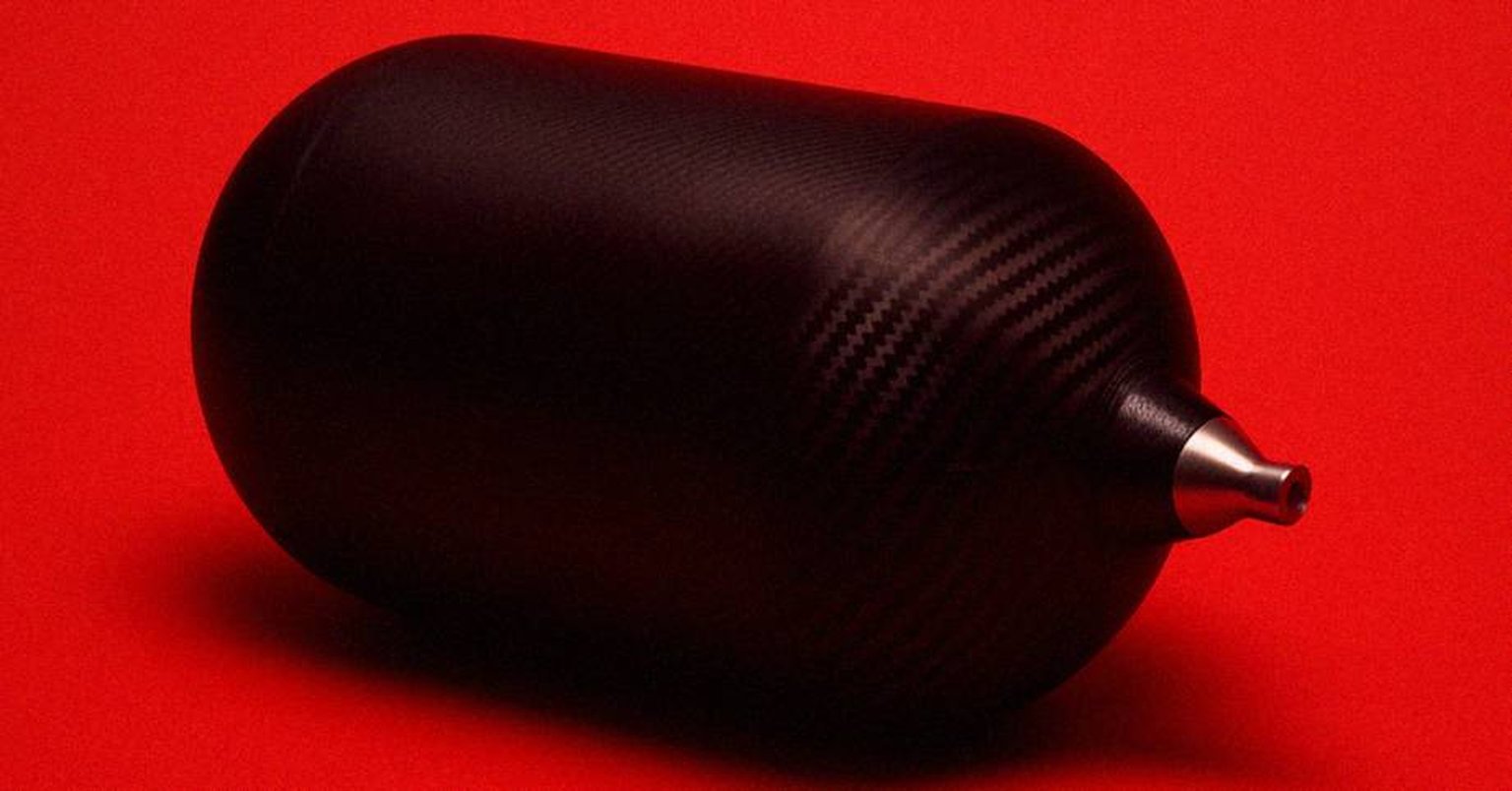
A composite-cure autoclave is a sealed pressure vessel used to cure prepreg laminates under simultaneous vacuum, heat, and elevated external gas pressure. The name is from Greek auto- (self) and Latin clavis (key), describing a self-locking vessel. A typical cycle draws vacuum on the bagged laminate, ramps temperature with one or more dwells under elevated pressure (often 6 to 7 bar), holds at the matrix cure temperature, then cools slowly. Internal thermocouples, vacuum-bag sensors, and pressure transducers monitor the run.
The pressure is the load-bearing part of the name. Heat alone, in an oven, will cure a resin. The external gas pressure is what collapses gaseous voids trapped between plies and compacts the laminate. The combination drives fiber volume fractions to roughly 55 to 65 percent and void content below 1 percent, which is the consolidation quality benchmark for primary aerospace structures and high-performance racing parts.
How to recognize and how to check#
A composite-cure autoclave is identifiable by three features.
It is a horizontal cylindrical pressure vessel, usually with a clamshell or front-loading door, mounted on rails or a frame inside a temperature-controlled enclosure. Aerospace-scale units run on the order of 70 by 30 ft (Spirit AeroSystems' 787 fuselage barrel autoclaves in Wichita), with a record-class unit reaching about 120 by 30 by 30 ft at roughly 0.7 to 1.0 MPa nitrogen pressurization. Sporting-goods and small-aerospace shops run much smaller cabinet-scale units.
It is plumbed for an inert pressurization gas (typically nitrogen, occasionally carbon dioxide), high-pressure relief, vacuum-bag connections per part, multiple thermocouple feedthroughs, and a controller that runs a programmed temperature-and-pressure profile.
It is paired with vacuum-bagging consumables (peel ply, breather, release film, bagging film, sealant tape) and prepreg materials qualified for an autoclave cure cycle, since not every matrix system is autoclave-compatible.
A non-composite autoclave (medical sterilizer, food-industry retort, microbiology autoclave) shares the pressure-vessel architecture but operates at much lower pressure (typically 15 psi saturated steam) and serves a different output. The keyword overlap is real, the equipment is not interchangeable.
What the pressure actually does#
The cure-cycle physics are straightforward.
A prepreg ply contains reinforcement fiber pre-impregnated with a metered amount of partially cured B-stage resin. When stacked into a bagged laminate, ply-to-ply interfaces and intra-ply tow channels contain small volumes of entrapped air and, as the resin heats, of volatile reaction by-products. Without external pressure, those gases nucleate into voids that persist into the cured laminate, reducing matrix-dominated properties (interlaminar shear strength, compression modulus) and accelerating moisture uptake and fatigue.
Elevated external gas pressure compresses those bubbles into solution or out of the laminate through vacuum and breather paths. At 6 to 7 bar applied across the bag, the partial pressure of the trapped gases is overwhelmed and the resin can flow into the spaces the gas occupied. The result is a consolidated laminate with fiber volume fraction in the 55 to 65 percent range, void content below 1 percent, and matrix-dominated properties at their design values.
A typical cycle for a Toray 3900-series prepreg or Hexcel HexPly 8552 epoxy looks like this in outline: vacuum hold and leak-back check at room temperature, pressure ramp to 6 to 7 bar, temperature ramp at roughly 1 to 3 °C per minute, dwell at an intermediate temperature for resin viscosity reduction and air evacuation, ramp to the cure temperature (commonly 177 °C for 350 °F-cure systems), dwell at cure temperature for 2 to 4 hours, controlled cool-down to release temperature. Total cycle is 4 to 8 hours depending on part thickness and matrix system.
Confusion points#
The medical-autoclave overlap. "Autoclave" by itself returns medical-sterilization, microbiology, and dental results at high volume; the composite-cure usage is a specialized sense. Both are sealed heated pressure vessels. They differ on operating pressure (composite at 0.3 to 0.7 MPa external gas, medical at roughly 0.1 MPa saturated steam), media (inert pressurizing gas versus steam), and purpose (laminate consolidation versus microbial sterilization).
Autoclave versus oven cure. An oven applies heat without elevated external pressure (vacuum-bag pressure is roughly 1 atm, or 0.1 MPa). Out-of-autoclave (OOA) prepregs are engineered to reach near-autoclave porosity in oven cures by leaving air-evacuation pathways through the ply, but with much less pressure margin against trapped gas. OOA is the choice when part size exceeds the available autoclave, when capital cost or energy cost dominates, or when the matrix system supports it.
Autoclave versus a press. A heated press applies external pressure mechanically through matched rigid tooling, with the upper and lower platens transmitting the load. A press can hit higher local pressures than an autoclave (hundreds of bar in HP-RTM), but only across the area the platens cover and only on parts that fit between them. An autoclave applies pressure isostatically across the bag, regardless of part shape, and is the right tool when the part geometry doesn't suit matched tooling.
Autoclave is not a strain-free part. Mismatched thermal expansion between fiber and resin (the resin shrinks more on cooldown than the fiber does) leaves residual stress in the laminate. Cure-cycle optimization, slow cooldown, and post-cure can reduce it, but the autoclave does not produce a stress-free part by construction.
Autoclave size caps part size. A part cannot exceed the autoclave's internal envelope. This is the practical reason large aerospace primaries split into sections (Boeing 787 forward fuselage Section 41 wound separately from Section 43 and joined later) and the reason very large structures (utility wind blades, yacht hulls) use OOA or VARTM processes that scale beyond the available autoclave footprint.
Related terms#
- Prepreg: the pre-impregnated reinforcement that an autoclave cures. The autoclave cycle is matched to the prepreg's matrix system.
- Fiber volume fraction: the consolidation metric the autoclave drives upward. Autoclave-cured aerospace primaries commonly hit 60 to 65 percent.
- Void content: the porosity metric the autoclave drives downward. The aerospace quality threshold of under 1 to 2 percent void content is the figure autoclave-cured laminates routinely meet and OOA processes work to approach.
- Vacuum infusion (VARTM): the contrasting closed-mold process that scales to very large parts (wind blades, yacht hulls) without an autoclave, at the cost of lower fiber volume and longer cycle.