
What is delamination in a composite laminate
Delamination is the separation of adjacent plies along their interlaminar plane within a composite laminate, the layers peeling apart at the bond between them. It is essentially an interlaminar crack and is the dominant subsurface failure mode in composite structures.
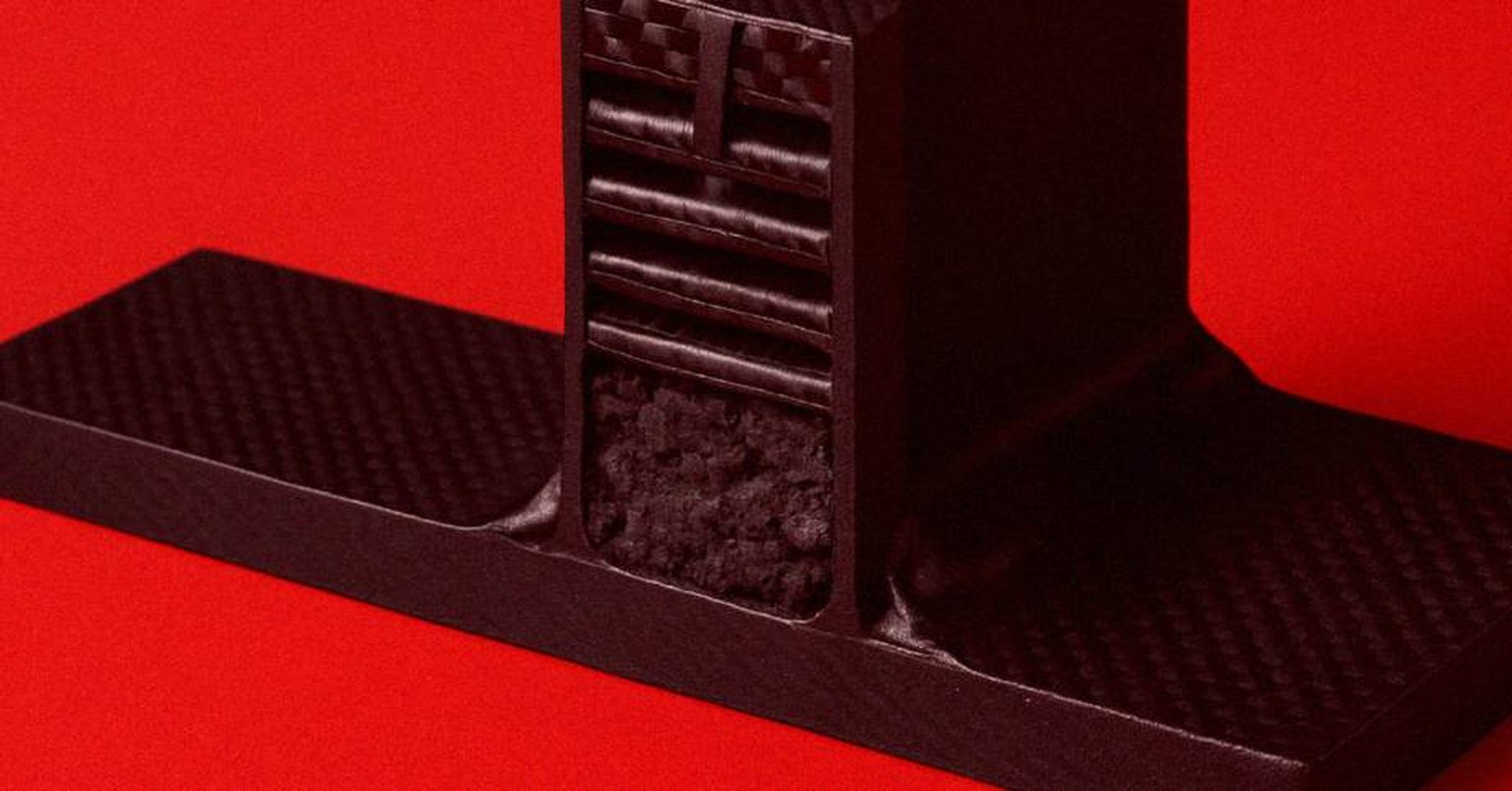
Delamination is the separation of adjacent plies along their interlaminar plane within a composite laminate, the layers peeling apart at the bond between them. The name comes from the Latin de- (separation) and lamina (thin layer). It is essentially an interlaminar crack.
Delamination is caused by impact, overload, out-of-plane stress, contamination, or curing thermal stresses. Detection relies on ultrasonic pulse-echo (back-wall attenuation), active thermography (thermal-impedance anomalies), or shearography (out-of-plane surface strain under load); a coin tap gives a quick qualitative hint via a dull sound.
How to recognize delamination#
Three observation modes find delamination in a composite structure.
Subsurface ultrasonic indication. A pulse-echo UT scan over a delaminated region shows an early reflection from the air gap at the delamination plane and attenuated or absent back-wall echo. The early reflection's time-of-flight tells the depth of the delamination; the lateral extent is mapped by scanning the probe across the surface. On a phased-array ultrasonic (PAUT) C-scan, delaminations appear as colored patches against the background of intact laminate.
Thermal anomaly. Under active thermography, the surface above a delamination cools at a different rate than surrounding intact laminate because the air gap is a thermal barrier. The contrast appears in the IR-camera time series and is mapped as a thermogram.
Acoustic contrast under tap. A coin or instrumented tap over an intact laminate produces a sharp ringing acoustic response. Over a delamination, the surface response is dampened and dull. This is a qualitative field check, not a quantitative measurement.
Surface visual inspection is generally not sufficient. Internal delaminations sit beneath an undisturbed paint and clearcoat, which is why composite NDT exists as a specialty. The most common confusion is between a cosmetic clearcoat crack (visible, structurally benign) and a structural delamination (subsurface, structurally significant), which look nothing alike under the relevant inspection methods but can coexist on the same panel.
Why delamination matters more than tensile loss#
The structural consequence of delamination is asymmetric, and the asymmetry is the practical key to understanding the defect.
In-plane tensile strength is largely retained unless the delamination is accompanied by significant fiber fracture. The fibers themselves are continuous and intact through the delaminated region, and tensile load runs along the fiber direction regardless of whether the plies are bonded to one another.
Out-of-plane shear transfer drops sharply. The matrix at the interlaminar region transferred shear between adjacent plies; with the bond broken, that shear path is gone. Under any load that requires the laminate to act as a stack of plies (bending, torsion, transverse compression), the delaminated region loses the structural cohesion the matrix provided.
Compressive buckling resistance drops most sharply. The critical buckling stress of the separated sublaminate scales with the square of its slenderness:
σ_cr = π² E (t_eff / L)²
where t_eff is the effective sublaminate thickness, E is the Young's modulus, and L is the unsupported buckling length. A delamination at mid-thickness halves the effective sublaminate thickness, which divides the critical buckling stress by four. A large delamination near the surface, where the sublaminate is thin, can drop the local critical stress by an order of magnitude. This is the mechanism by which a delaminated carbon tube fails catastrophically under a sudden compressive event after feeling stiff on a normal test ride.
Cyclic loading propagates delaminations through fatigue crack growth at the interlaminar region. A small initial delamination from a missed impact can grow under thousands of load cycles until the structure reaches the size that drives buckling failure.
Confusion points#
Delamination versus disbond. Closely related. Delamination is separation between plies within a single laminate (one consolidated layup separating at the interlaminar plane). Disbond is separation at an adhesive joint between two separately fabricated components (a stiffener separating from a skin, a sandwich face sheet separating from a honeycomb core). Same physical phenomenon (loss of bond at an interface), different location in the assembly.
Delamination versus matrix crack. A matrix crack is a crack within a single ply, propagating perpendicular to the fiber direction in the resin between fibers. A delamination is a separation between two plies, propagating parallel to the ply surfaces in the resin-rich region between them. Matrix cracking often precedes delamination under fatigue; under impact, both occur together.
Delamination versus BVID. BVID is the damage category (impact damage too subtle for visual detection). Delamination is the structural feature (separation between plies). BVID produces internal delamination, and that internal delamination is what the BVID inspection regime is built to find.
Cosmetic clearcoat crack versus structural delamination. A clearcoat crack is a surface-paint phenomenon, visible to the eye, structurally benign. A structural delamination is subsurface, invisible to the eye, structurally significant. Both can appear on the same panel from the same impact event, and distinguishing them requires either NDT or controlled stress testing.
"The frame feels fine" versus the actual structural state. A test ride loads the laminate within its tensile and bending envelope; the in-plane tensile path is intact and the laminate feels stiff. Compressive buckling resistance, which is the mode delamination compromises most, only matters under a sudden high-force compressive event (a pothole hit, a heavy landing, a hard out-of-saddle effort). The test ride does not exercise the failure mode that delamination drives. This is why visual-plus-test-ride inspection is inadequate for post-crash composite assessment and why NDT exists.
Related terms#
- Barely visible impact damage (BVID): the impact-damage category that produces internal delamination with no visible surface mark.
- Phased array ultrasonic testing (PAUT): the workhorse modality for delamination detection on composite structures.
- Shearography: the full-field optical method for large-area delamination scanning on honeycomb-core and wind-blade structures.
- Void content: the related manufacturing-anomaly metric that can predispose a laminate to interlaminar failure.