
What is vacuum infusion (VARTM) in composite manufacturing
Vacuum Infusion / VARTM (Vacuum-Assisted Resin Transfer Molding) uses a single rigid tool face and a flexible vacuum bag to form the cavity over a dry preform. Vacuum is drawn and atmospheric pressure drives resin from one edge through the fibers, often via flow media.
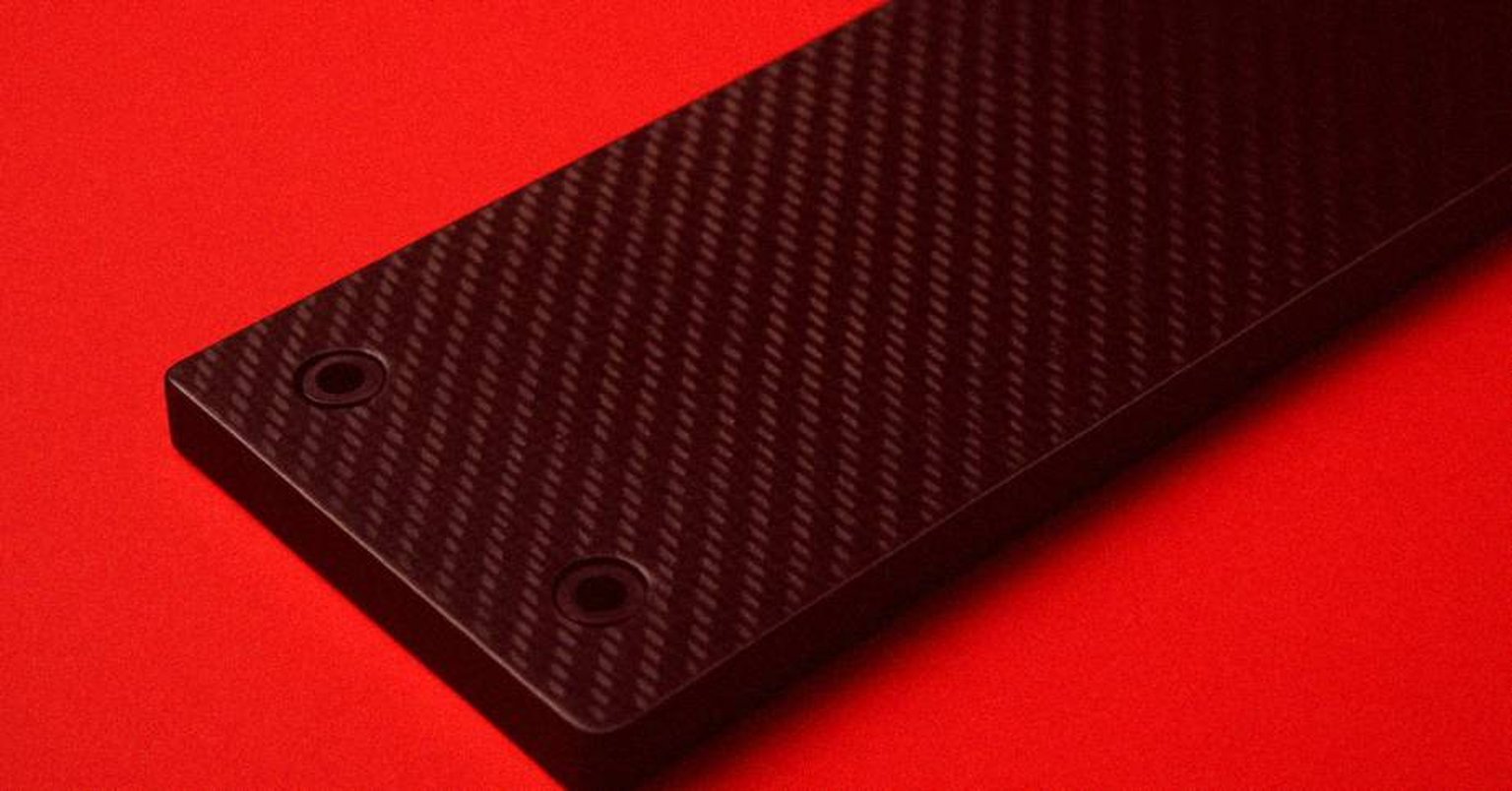
Vacuum Infusion / VARTM (Vacuum-Assisted Resin Transfer Molding) uses a single rigid tool face and a flexible vacuum bag to form the cavity over a dry preform. Vacuum is drawn and atmospheric pressure drives resin in from one edge through the fibers, often via flow media.
It is watched through the transparent bag and monitored by vacuum transducers. VARTM has low tooling cost and excels at very large, complex shapes such as wind-turbine blades, yacht hulls, and large structural panels. The trade-offs: it does not reach autoclave fiber volume fractions, cure times are longer, and one face (the bag side) lacks precise dimensional control.
How VARTM works#
The process steps follow a defined order.
The dry preform (woven fabric, stitched multiaxial fabric, or chopped strand mat for some applications) is laid up on the rigid tool face in the design ply sequence. Core materials (balsa, PVC foam, honeycomb) are placed where the structural sandwich requires them. Inserts and hardpoints are positioned.
Peel ply (a release fabric), flow media (a coarse mesh that distributes resin laterally faster than the preform alone), and resin distribution channels are layered over the preform. The arrangement controls the resin flow front: the goal is uniform wet-out across the part with no dry zones and no premature gel.
A flexible vacuum bag (nylon film, typically 0.05 to 0.1 mm thick) is sealed to the tool around the perimeter with tacky tape. The cavity is evacuated. Vacuum integrity is verified by a leak-back test: the pump is closed off and the vacuum level is monitored for several minutes; any rise indicates a leak.
A resin inlet (one edge of the part, a set of inlet lines, or a single central injection point) is connected to a resin pot. The inlet valve is opened. Atmospheric pressure on the outside of the bag (about 1 bar) drives resin from the pot, through the inlet, across the flow media, and down into the preform. The resin flow front is observed through the transparent bag and tracked across the part until it reaches the vacuum outlet.
Cure proceeds at room temperature or elevated temperature, depending on the resin system. Wind-blade resins commonly cure with elevated-temperature post-cure for full property development.
Where VARTM dominates#
Three application categories cover most VARTM volume.
Wind-turbine blade manufacturing. The dominant application. Vestas, Siemens Gamesa, GE Vernova, and Chinese OEMs all run VARTM lines for blade shells, shear webs, and root sections. Blade lengths now exceed 100 meters, with single-piece infusions of half-shells the standard process. The driving factors: part size, tooling cost, and the ability to integrate balsa and foam core into the infusion sequence.
Marine composite manufacturing. Yacht hulls, sailboat hulls and decks, commercial vessel superstructures, hovercraft skirts. The historical home of vacuum infusion, with decades of practice before wind-blade volume took over.
Large structural panels and architectural composites. Bridge deck panels, pedestrian bridges, modular building panels, transportation infrastructure. The combination of large area, low tooling cost, and integral sandwich construction is the value proposition.
The trade-offs versus closed-mold and autoclave#
VARTM's performance envelope is bounded by its driving pressure: about 1 bar of atmospheric pressure differential, compared to 6 to 7 bar in an autoclave or tens of bar in HP-RTM.
Fiber volume fraction. Typical VARTM Vf is 50 to 60 percent. Autoclave prepreg reaches 55 to 65 percent. The lower driving pressure cannot consolidate fibers as tightly. For wind blades and yacht hulls, where the part is structure-volume-limited rather than weight-limited, the lower Vf is acceptable. For aerospace primary structure, where minimum weight at a given strength is the design target, autoclave Vf is required.
Surface finish. The tool-side face is smooth and dimensionally controlled by the rigid tool. The bag-side face is textured by the flow media and not dimensionally controlled to closed-mold tolerances. For marine and wind, the bag-side face is internal or non-aerodynamic and the asymmetry is acceptable. For aerospace skin where both faces must meet finish standards, RTM or autoclave with matched tooling is the alternative.
Cure time. Cycle times are hours to a full day. HP-RTM cycles in 2 to 5 minutes. The trade-off is appropriate for low-volume large parts; for high-volume small parts, HP-RTM is the better choice.
Void control. Achieving consistent low void content under VARTM requires meticulous vacuum integrity, careful resin selection (low viscosity, good flow), and operator skill in monitoring the flow front. Wind blades target void content below 2 percent; aerospace VARTM applications target below 1 to 2 percent, comparable to autoclave but harder to achieve consistently.
Confusion points#
VARTM versus RTM. RTM uses a matched, rigid two-part mold with resin injected under low-to-moderate pressure. VARTM uses one rigid face and a flexible vacuum bag with vacuum-driven flow. RTM tooling is more expensive but gives both-face surface finish and higher Vf.
VARTM versus HP-RTM. HP-RTM uses matched steel tooling in a press with high-pressure resin injection. Cycle times of 2 to 5 minutes, class-A finishes, for high-volume automotive parts. VARTM is the low-volume, large-part alternative.
VARTM versus vacuum bagging. Vacuum bagging is the broader category: any process that uses a flexible vacuum bag to consolidate a laminate under atmospheric pressure. VARTM is specifically the infusion process where a dry preform is infused with liquid resin under vacuum-driven flow. Casual use of "vacuum bagging" in marine and wind contexts sometimes implies VARTM, but the terms are not synonymous.
Vacuum bagging as a standalone process. Vacuum bagging on its own is the consolidation step for wet layup, repair patches, and prototypes. The un-cured laminate is sealed under a gas-impermeable flexible bag over bleeder and breather fabrics on a rigid tool, and a vacuum pump evacuates the cavity. Atmospheric pressure compacts the plies and draws out trapped air and excess resin. Vacuum bagging is also the first step inside autoclave and OOA cures. It applies only atmospheric pressure unless performed inside a press or autoclave.
Vacuum infusion versus resin infusion. The terms are used interchangeably in marine practice. Some manufacturers reserve "vacuum infusion" for processes with significant flow media and "resin infusion" for processes that infuse directly through the preform without distinct flow media. The distinction is not standardized.
Bag bridging is a failure mode. Bag bridging occurs when the flexible bag does not conform to a concave feature of the preform (an internal corner, a step, a hardpoint pocket), leaving an air gap. The result is local under-consolidation and a void or surface defect at the bridge location. Proper bag preparation (pleating, undersized cut, multiple drape passes) prevents bridging.
Related terms#
- Resin transfer molding (RTM): the matched-mold closed-process relative of VARTM, with both-face surface control and higher Vf.
- Autoclave cure cycle: the high-consolidation cure regime that VARTM cannot match, and the aerospace primary-structure benchmark.
- Fiber volume fraction (Vf): the consolidation metric that VARTM reaches at the lower end of the high-performance range.
- Void content: the porosity metric that VARTM cycles are tuned to minimize.