
Buy used bicycle: the carbon-frame due-diligence playbook for the secondhand market
The buyer-side reference for evaluating a used carbon bike: why carbon hides damage that metal would show, the 20-minute hands-on triage that runs in a seller's driveway, the listing photo red flags to filter on before traveling, the financial math for walking away, and the script for requesting an independent inspection without killing the deal.
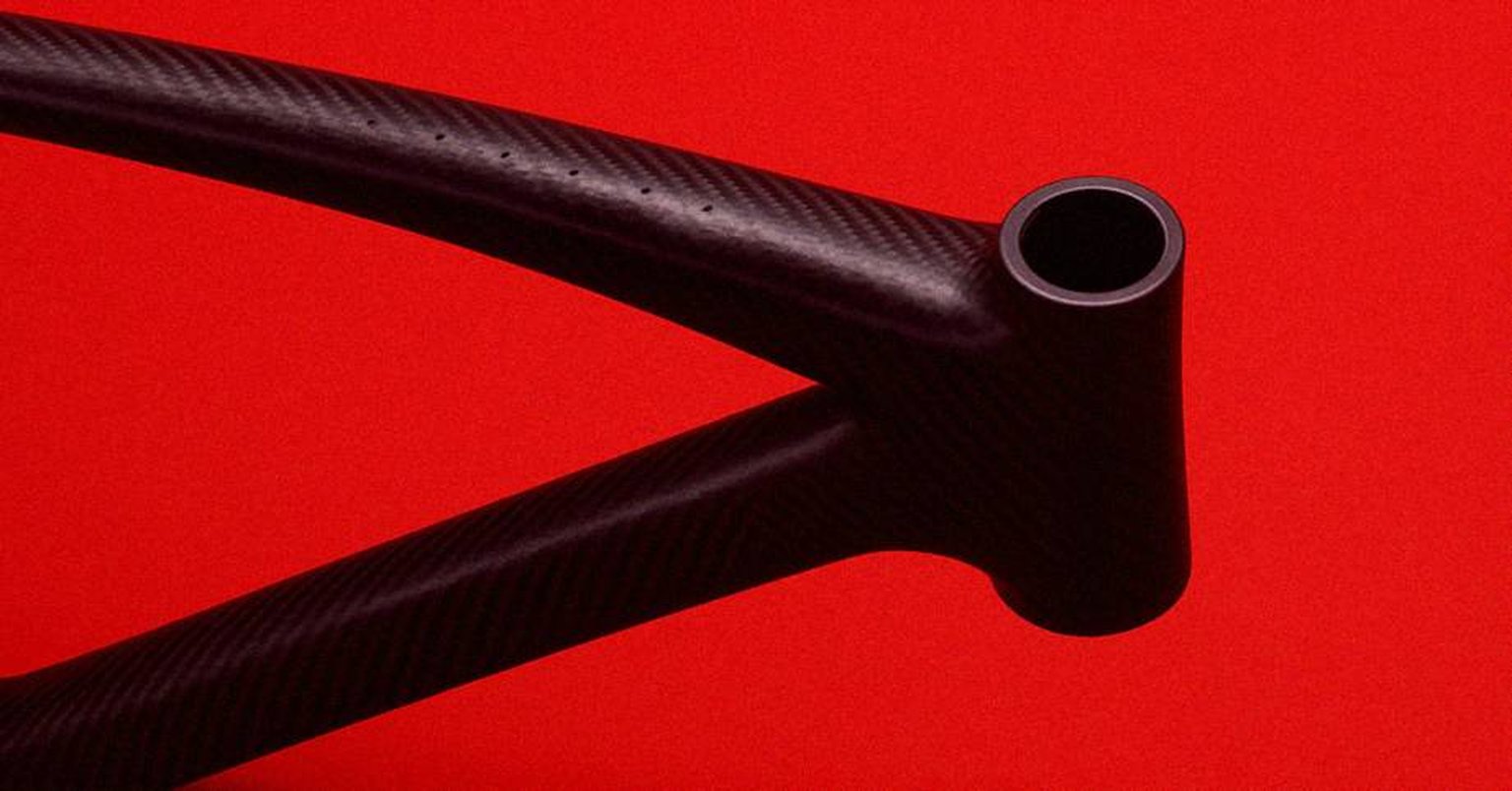
Carbon-fiber-reinforced polymer (CFRP) is the worst material for an unaided visual assessment of structural integrity on a used bike. It exhibits linear-elastic behavior right up to ultimate failure, with no plastic deformation as a warning. Damage can be entirely internal as interlaminar delamination or matrix microcracking, with no surface evidence at all, and both Trek and Cannondale owner manuals warn that a carbon part can break suddenly after an impact. The buyer-side discipline that closes the visual gap is a documented protocol: triage tools you can carry in a backpack, a financial test that overrides emotional momentum, and a script that gets a defensive seller to agree to an independent inspection without killing the deal.
This is the reference page for buying a used carbon bike. It covers why carbon is structurally different than the materials it shares a market with, the 20-minute hands-on triage that runs the same in a Facebook seller's driveway as in a Pinkbike pickup, the listing photo patterns to filter on before traveling, the financial math for walking away, and the inspection-request script that gets the bike actually inspected.
Why carbon hides the damage metal would show#
Metallic frames give warnings. Aluminum dents and bends before fracture. Steel develops visible surface cracks. Titanium yields before catastrophic failure. CFRP does none of this. It is anisotropic, with stiffness engineered along specific load paths, and it can lose substantial local strength while presenting an undisturbed paint surface and a test-ride feel that reads as healthy.
Low-velocity impact in a carbon laminate typically does not begin with dramatic fiber rupture. It begins with matrix cracking, which acts as a precursor to delamination between plies. Once present, delaminations propagate under in-plane compressive loading, potentially leading to catastrophic failure (University of Bristol impact-damage laminate study). The U.S. Federal Aviation Administration's composite guidance formalizes the concept of barely visible impact damage (BVID) precisely because detectability and severity are not the same thing (FAA AC 20-107B).
The practical implication for a buyer: "I rode it home and it felt fine" is a statement about the redundancy of a quasi-isotropic layup, not the residual strength of any specific zone. A frame can lose roughly 40 to 50 percent of its local interlaminar shear strength in a chainstay or down tube and still feel stiff and responsive under normal pedaling load, with the failure mode arriving on a pothole or a hard out-of-the-saddle effort.
Heat is the under-appreciated second threat. Carbon frames use epoxy resins with a finite glass transition temperature (Tg). Sustained extreme heat in a closed car trunk or a metal Bay Area garage in late summer can exceed the Tg of older or lower-grade resin systems, softening the matrix and reducing interlaminar shear strength. The seller does not need to be hiding anything for this to have happened to the bike.
The 20-minute hands-on triage#
You can carry the tools for a useful in-driveway screen in a small bag: a 1,000+ lumen LED flashlight, a soft cotton rag, a coin, metric hex wrenches, a chain-wear checker, and a microfiber cloth. The screen finds gross defects and rules out the most common red flags. It does not replace NDT.
Clean-and-scan. Wipe the frame down to remove road film that can hide cracks, then hold the LED at a 5 to 10 degree raking angle against each tube. Raking light magnifies three-dimensional surface imperfections (paint steps, clearcoat cracks, localized bulges) that direct or overhead light flattens out.
Rag snag test. Draw a soft cotton cloth slowly over any suspect area. A crack that has penetrated the clearcoat exposes jagged broken-filament edges that snag cotton fibers, leaving telltale white threads on the frame (Velontic DIY carbon inspection). It is one of the most reliable cheap tests on the list.
Symmetrical coin tap test. Tap lightly and rapidly along each tube with a coin edge. Sound laminate gives a sharp, high-pitched "tick"; delamination, core crushing, or matrix cracking drops the pitch to a dull, muted "thud." Wall thickness and tube profile vary across the frame, so the comparison between matched left and right members (the two chainstays, the two seatstays, the two fork blades) is diagnostic, not the absolute tone of any one tap. The instrumented version of this test (an electronic digital tap hammer that captures contact duration and stiffness) is what serious composite labs use; the coin version catches the worst cases for free.
Flex and lateral load test. Gently load the seatstays laterally with both hands and the fork fore-aft against the front brake. A healthy bonded structure flexes silently. Distinct clicks or pops suggest failed bonding at junctions, a loose internal sleeve, or interlaminar delamination.
Headset, steerer, and cockpit audit. Loosen the stem clamp and slide the stem up the steerer tube to inspect for horizontal spacer score lines, compression-plug ovalization, or over-torque crushing. Check the handlebar near the lever clamps and the stem faceplate for crushed fibers. Integrated cable routing on modern aero bikes (the Tarmac SL7, the Aeroad CFR, most current Pinarello platforms) makes this audit harder and more important.
Seatpost and seat-tube collar check. Extract the seatpost. Inspect the post and the inside of the seat tube for scoring, gouges, or crush from over-tightened clamps. Frames built without a drilled relief hole at the end of the clamp slot are prone to carbon creep: a micro-crack at the slot turns roughly 90 degrees and propagates around the seat cluster, eventually separating the seat tube from the frame under rider movement. The seat cluster of a high-mileage carbon frame deserves a separate raking-light pass on its own.
Wheel rim bed and spoke-hole audit. Spin both wheels for true and bearing roughness. Inspect carbon rim beds for fine circular hairline cracks radiating from spoke nipples or the valve hole, which indicate high spoke-tension fatigue. Carbon wheels often outlive several frames and arrive on used bikes well past their original tension life.
Other warning signs flagged by manufacturers and worth treating as no-buy conditions pending professional assessment: an unusual feel, soft or altered shape, creaking, visible cracks, or a white or milky appearance in the carbon.
Reading listing photos before you travel#
Sellers leave indicators of trauma, neglect, or misrepresentation in listing photos, sometimes unintentionally. Filtering on these patterns before driving across the Bay Area saves a Saturday morning.
Pristine localized paint touch-ups or a respray on one tube. Masks a repair or structural crack. Request pre-paint photos and any professional repair invoices; if the seller cannot produce them, the touch-up is the story.
Mismatched or chronologically inconsistent components. A brand-new fork, cockpit, or derailleur on a five-year-old frame is a post-crash rebuild indicator. Ask for replacement history and inspect the tubes adjacent to the replaced parts (the down tube near a new fork, the chainstays near new dropouts).
Selective photo angles. Listings that show the bike from the drive side at three different angles but never the non-drive side, the BB cluster from below, or the dropouts from behind are omitting the high-stress zones.
Exposed weave on a solid-paint model. Often means paint was sanded or chipped to monitor or patch a crack. Cross-reference against the model year's factory paint schemes before traveling; some manufacturers run a clear-over-weave option in the same year, but on most solid-paint frames the bare weave is the answer.
Wavy or rippled clearcoat lines. Underlying compressive buckling of plies (front-end collision). In-person coin tap and raking-light evaluation of the section.
Starburst paint crazing. Localized crushing or extreme out-of-plane flex. Physical exam with rag-snag check on those exact areas.
Tape or accessories over frame junctions. Tape over the chainstay root, an accessory pouch covering the BB shell from below, a frame bag obscuring the down tube. Ask the seller to remove all tape and protectors before inspection. Refusal is a flag.
Ground-off, sanded-out, or taped-over serial label. Abort and report the listing. The serial defacement is the story regardless of why the seller claims it happened.
The patterns are not individually conclusive. A repainted frame on a high-mileage commuter is not the same red flag as a repainted Tarmac SL7 on Facebook Marketplace at 35 percent below comp. The filter is cumulative.
The financial test for walking away#
The buyer-side mistake that costs the most money is comparing the repair quote to the frame's original MSRP. The correct comparison is all-in restoration cost versus an equivalent undamaged bike on the same channel. Published specialist pricing gives the realistic numbers (Appleman Bicycles):
| Intervention | Typical cost (USD) |
|---|---|
| Spot-check NDT | ~$150 |
| Full frame and fork ultrasound or thermography scan | 500 |
| Mechanical teardown (strip fee) | ~$150 |
| Basic carbon structural repair | 500 |
| Complex carbon structural repair | 750 |
| Cosmetic paint restoration | 2,000 |
| Mechanical rebuild and recabling | 250 |
A working financial test, where Vmarket is fair market value of a healthy example of the same model and year, and the risk margin accounts for hidden variables and lost time:
C
acquisition+ Cstrip+ CNDT+ Crepair+ Cpaint+ Crebuild≤ Vmarket× (1 − 0.20)
If total restoration cost approaches the price of an equivalent undamaged bike, the suspect frame is a financial write-off. The discipline is to run the math before, not after, the emotional commitment. Most buyers do the opposite.
The 20 percent risk margin is not arbitrary. It accounts for the unknowns the inspection cannot resolve: latent damage the NDT does not find, post-repair handling differences a careful rider will notice, and the resale discount the next buyer will apply to any frame with a documented repair history.
The inspection request script#
Sellers respond badly to inspection requests framed as accusations and well to inspection requests framed as standard practice. A workable script:
"I'd like to move forward at your asking price, contingent on a standard structural check of the carbon frame at a local dealer. Carbon laminates can develop subsurface issues from over-torque or transport bumps without surface evidence, and I'd rather both of us know what we're trading. I'm happy to cover or split the cost, and a clean report means I write the check the same day."
Three things matter about the script. First, it is framed as neutral two-party safety validation rather than an accusation about this particular bike. Second, it offers to share or absorb the cost, removing the seller's financial objection. Third, it commits in writing to immediate purchase on a clean report, which removes the seller's "you'll find an excuse to back out" objection.
If the seller is defensive or refuses a non-destructive in-person check, the reaction is the red flag. Sellers who have ridden a frame hard but not crashed it are usually fine with an inspection. Sellers who refuse one are usually the sellers who know what an inspection will find.
A specialized in-person NDT scan (ultrasound or thermography) runs 500 for the frame and fork with a written report (Ruckus Composites, Spyder Composites). On a frame priced in the four-figure range, that is cost-effective insurance. On a frame priced under the inspection cost, the calculus changes and the buyer is back to the 20-minute hands-on triage as the only available verification.
Channel-specific risk profile#
The triage runs the same regardless of channel. The channel-specific risk profile changes which patterns dominate.
Facebook Marketplace and Craigslist are excellent for local discovery and operate under pure caveat emptor. Facebook Marketplace shipping eligibility is limited to items priced 500, which makes most complete carbon bikes local-pickup only on Facebook even though the channel is otherwise excellent for finding bikes. The risk patterns: opportunistic sellers, theft, deflection deals ("needs battery" used to distract from a costly system failure).
Pinkbike is the enthusiast channel. Sellers tend to be more knowledgeable, listings are more honest on average, and the channel has a community-enforced quality floor. The risk patterns: end-of-season demo and resort fleet bikes that have compressed years of impacts into one season, and high-end MTB platforms where the typical buyer underestimates the inspection demand on a thicker-laminate MTB frame.
eBay carries the lowest seller-buyer trust but the strongest dispute-resolution backstop. Useful for parts and verifiable-by-photo components; harder for complete carbon bikes where the inspection has to happen post-receipt.
Certified pre-owned dealers (The Pro's Closet, Cycle Limited, Upway for e-bikes) carry a price markup commonly cited around 15 to 25 percent over private-party value, justified by consumer protection coverage, a limited store warranty often 3 to 12 months, a return window such as 30 days, and pre-sale refurbishment. The intake gates are a buyer-side signal: Cycle Limited explicitly will not buy structurally compromised, repaired, or repainted frames, forks, wheels, or rear triangles; The Pro's Closet intake requires generally 2018 or newer with original MSRP at or above $2,000. Both are CPO-band signals, not a guarantee that any individual unit is defect-free.
Local consignment shops sit in between. The shop's reputation is the gate, and consignment posture means the shop has incentive to move bikes that the more rigorous CPO channels declined.
Provenance and the stolen-bike check#
Before traveling to inspect, run the serial through the major registries. On carbon frames the serial is usually a printed barcode label under the clearcoat on the bottom-bracket shell underside, on the inner non-drive-side chainstay, or near the rear dropouts inside the frame. Ask for it before meeting.
- BikeRegister runs a national BikeChecker portal.
- Project 529 Garage is a global database used by police, universities, and shops; searches serials, models, colorways, and registered Shield IDs.
- Bike Index is an open-source global registry that scrapes eBay, Craigslist, and Facebook Marketplace for matches to reported-stolen bikes.
Examine the serial label in person. If it is missing, scraped, taped over, or the metal beneath shows gouging or chemical melting, treat the bike as stolen and walk away. Report the listing. A vague ownership story, missing serial, or refusal to share the serial before meeting is a dealbreaker.
The paperwork fallacy#
Sellers sometimes claim "I have the original receipt, so you're covered by the lifetime warranty." This is wrong on two counts.
Major carbon manufacturers including Trek, Specialized, Canyon, and Pinarello write original-owner-only clauses; a warranty claim requires the claimant's legal identity to match the original invoice, so a secondary buyer's claim is denied. Some brands extend a discretionary crash-replacement discount to secondary owners, but it is never guaranteed and the discount is applied per case rather than as a transferable right.
A receipt is also not a certificate of structural health. It documents a financial transaction. A frame with perfect paperwork could have suffered an unrecorded roof-rack collision, a heat-cycled summer in a closed metal garage, or an over-torque event after the receipt was printed. The paper trail and the structural state of the frame are independent variables.
A documented frame accompanied by a certified ultrasonic or thermal inspection report does address the structural unknown the receipt does not. That documentation commands a modest certainty premium (commonly cited around 10 to 15 percent) precisely because it removes the buyer's largest unknown.
What this means for the buyer#
If the bike is in your price range and you have access to it in person, the order is: serial-check before traveling, listing-photo filter pass, 20-minute hands-on triage in the seller's driveway, walk-away math against an equivalent undamaged bike, inspection-request script if the bike survives the triage and the math, and a written NDT report from a specialist lab if the asking price justifies the 500 fee.
Treat inspection as part of the purchase budget, not a luxury. On a frame worth thousands, a few hundred dollars is the cost of separating an honest seller's bike from a cosmetically touched-up one, and the cost of separating "this can be ridden" from "this needs to go to a repair shop." The receipt cannot tell you that. The paint cannot tell you that. The test ride cannot tell you that. The triage and the report can.
Presidio Composites operates pulsed thermography NDT and returns a written report that sorts findings into Safe, Serviceable, or Unsafe, separates cosmetic marks from structural ones, and where damage is found returns an actionable remediation quote with explicit replacement-rather-than-repair guidance on bars, stems, and lightweight steerers. The buyer's leverage in any negotiation is the document; the document is also the artifact the next buyer will reference when the bike sells again.