
Bicycle accident lawyer: what a documented carbon inspection adds to the legal file
A bicycle accident lawyer building a defensible file on a carbon-frame failure needs a third-party NDT report that separates observation from opinion, preserves the failed part, and survives Federal Rule of Evidence 702 and the Daubert standard.
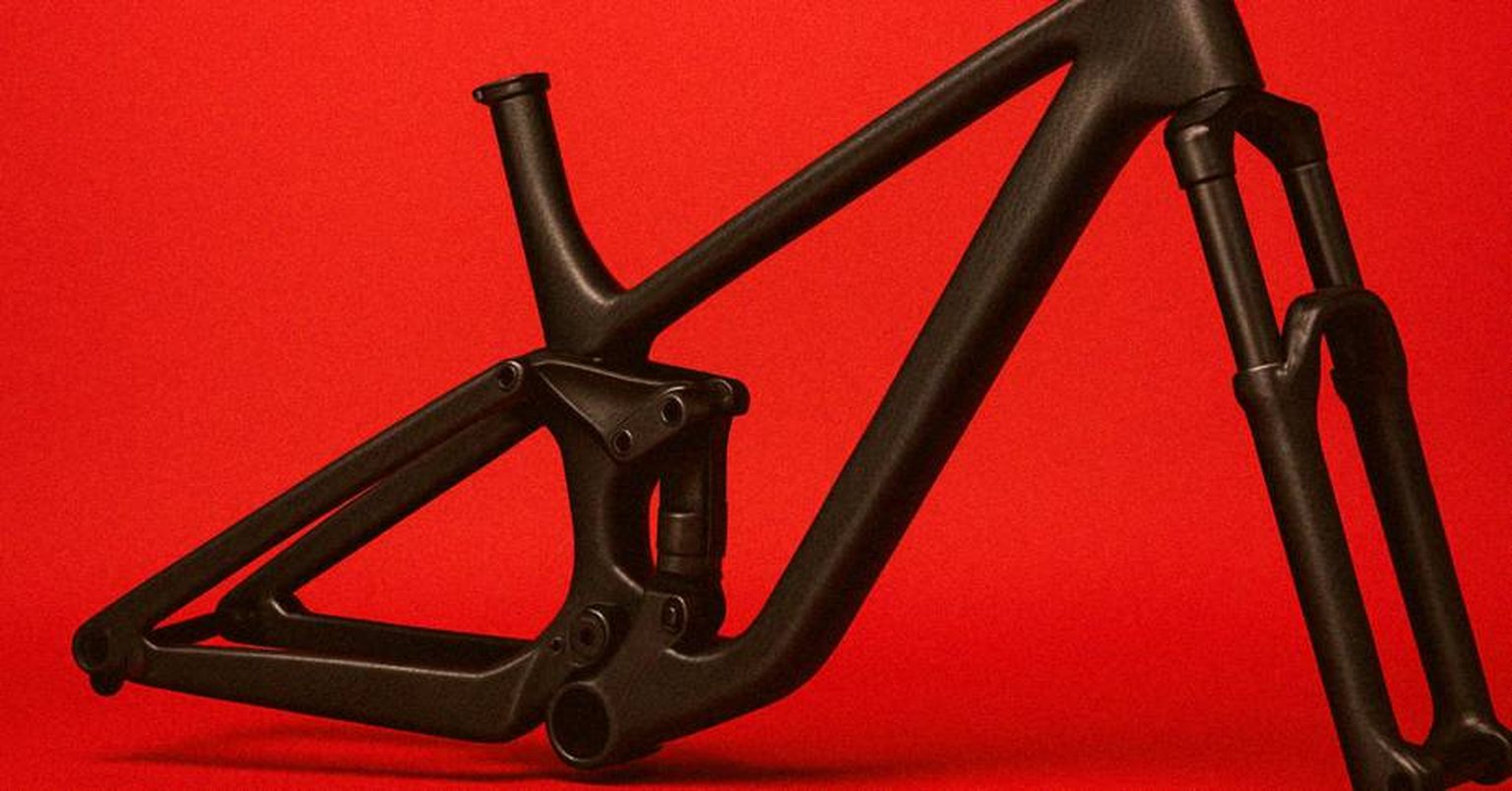
A bicycle accident lawyer building a defensible file on a carbon-frame failure case does not start with the litigation theory. The file starts with a documented third-party inspection that separates what the inspector saw from what the inspector concludes, preserves the failed part with chain-of-custody discipline, and produces evidence that survives the admissibility test the court will apply later. Federal Rule of Evidence 702 and the Daubert standard are the gatekeepers, and the bicycle-specific case law (Borel v Trek, Lynch v Trek, Derienzo v Trek) is consistent on what passes them and what does not.
This is the cluster's reference page on what a documented carbon inspection adds to a legal file. It covers why carbon-fiber reinforced polymer requires a different evidentiary approach than steel or aluminum, what an adjuster-ready third-party report contains, why observation and opinion must be separated in writing, how the bicycle-specific Daubert case law sorts admissible experts from excluded ones, and how a credible report supports both first-party recovery and downstream subrogation against a manufacturer.
Why carbon-fiber reinforced polymer changes the analysis#
Steel and aluminum bend, dent, or show visible stretch marks when overloaded. Carbon-fiber reinforced polymer (CFRP) is brittle and tends to fail in compression before tension, and a minor impact can produce subsurface matrix cracking or interlaminar delamination, the separation of adjacent plies, while leaving the outer paint and clearcoat visually pristine (Carbon Bike Doctor). The consequence for an accident file is that visual assessment alone is frequently inadequate for both insurance adjusting and litigation, and the standard adjuster instinct (look at the photos, value the repair, close the file) does not transfer cleanly from metal frames to composite ones.
Inspection-industry sources frame the safety stakes in stark terms: one commonly cited figure holds that a meaningful share of crashes attributable to undetected structural faults involve carbon components (Cycle Inspect). These specific percentages originate with inspection vendors rather than peer-reviewed studies and should be treated as advocacy estimates, not established epidemiology. The underlying point is uncontroversial and is the reason adjusters rarely override a credible professional recommendation to total a compromised frame. Hidden internal damage can precede sudden, catastrophic failure under load.
What an adjuster-ready third-party report contains#
A report that works for both claims adjustment and later litigation does five things in writing:
- Establishes the identity and insured value of the bike, including make, model, year, serial number, component upgrades, wheelset, purchase invoice, schedule amount, and a current valuation record.
- Documents pre-loss condition and any existing cosmetic marks.
- Preserves transit and packaging evidence if shipping is involved, including box exterior photographs, packing arrangement, retained packaging, and tracking documents.
- States a clear repairability and safety conclusion, with the basis for the conclusion specified.
- Provides a line-item repair-versus-replacement valuation tied to actual parts, labor, tax, and shipping.
The valuation discipline matters. The strongest first-party reports do not simply say replace frame. They explain whether the frame is repairable, whether repair would restore safe service, and whether replacement is required because repair is unsafe, unavailable, or uneconomic. That structure feeds the carrier's adjuster the inputs the carrier already needs to make its decision, which is what moves a claim through.
Observation and opinion in the report itself#
The more adversarial the file, the more rigorously the report must separate observation from opinion. The distinction is the load-bearing element of the report's evidentiary value.
Observation is what the inspector saw and recorded. Fracture location, fiber bloom, crushed laminate, chipped clearcoat, steering-impact marks, wheel-contact marks, box deformation, dropout movement, hanger displacement, witness marks on the seat collar, paint cracking around the bottom bracket shell. Each observation is paired with a photograph and a position reference (top tube near the head tube weld, drive-side chainstay at the bottom bracket junction, non-drive seatstay 80 mm above the dropout).
Opinion is what the inspector concludes from the observations. Unsafe to ride. Repairable by a named composite vendor. Not economically repairable. Consistent with the kinetic profile of a transport-induced lateral compression event. Inconsistent with the dynamics of a rider-initiated low-speed tip-over.
The strongest reports also state what rival explanations the inspector considered and how each was ruled in or out. In carbon cases the carrier or manufacturer often argues that the rider crashed first and the bike broke afterward, while the claimant's theory is the reverse. A report that addresses both hypotheses explicitly, and explains which the physical evidence supports, narrows the surface a defense expert can productively attack at deposition.
Federal Rule of Evidence 702 and the Daubert standard#
In federal cases and most state cases that have adopted the standard, the admissibility of expert testimony is governed by Federal Rule of Evidence 702 and the Daubert framework, which demand reliable scientific methodology and testing. Because composite mechanics differ from metallurgy, courts in carbon cases frequently require specialized training in composite laminates and physical or destructive testing of the actual component. General engineering or metallurgical credentials are often insufficient (Axley LLP).
The bicycle cases line up cleanly on method, not branding or confidence.
Borel v Trek (No. 09-cv-01312). A rider was severely injured when his carbon frame failed at the head tube, top tube, and down tube junction. The plaintiff's mechanical engineer concluded the frame was defective and proposed a thicker or reinforced-tube alternative design. The court excluded the opinions because the expert had not built, mathematically modeled, or physically tested the proposed alternative. The opinions were speculative; the court rejected them.
Lynch v Trek (No. 09-cv-3130). A rider was injured when his carbon fork failed. The plaintiff's expert was prepared to attribute the failure to a wrinkle in the fork's plies. Despite general aerospace-coatings experience, the court excluded him for lacking the specific qualifications for carbon-fork failure and for performing no quantitative testing of his wrinkle-propagation theory. The exclusion was upheld on appeal.
Derienzo v Trek. The court admitted a materials-science and metallurgy expert who had observed the actual frame, examined the failure site, and performed destructive analyses supporting a scientific conclusion. A separate bicycle-industry expert was limited to contextual topics (bicycle history, foreseeable use, component replacement) rather than causation.
Donat v Trek. A South Dakota federal court handling a carbon Trek Madone case allowed the manufacturing-defect path to proceed while dismissing design and warning theories that lacked the necessary expert support.
Read together, the bicycle-side rule is consistent. An expert survives by combining relevant academic training, hands-on bicycle-industry-specific experience, and physical testing of the actual component in question. Branding, confidence, and prior-testimony lists do not substitute for any of the three.
What this means for the report#
The report does not have to be the testifying expert's product, but it does have to be the kind of document a testifying expert can build on without contaminating their own methodology. That means the inspector who produces the report should not pre-commit to a litigation theory. The inspector documents the failed component, describes the method used, preserves the evidence trail, and gives a bounded opinion distinguishing observation, repairability, and defect causation. The lawyer's expert, if one is retained, builds the causation argument on the inspector's preserved record.
Subrogation and the manufacturer-defect path#
A subrogation claim is the first-party insurer's right to recover from a third party after paying its insured. If an independent report shows that a failure was caused by a manufacturing defect (inter-ply void contamination, severe resin starvation, layer misalignment) rather than external impact, the first-party insurer can pay its insured and then recover from the manufacturer's liability carrier through subrogation. For plaintiff attorneys representing the rider, a certified third-party report supplies the scientific foundation to file a complaint and survive early motions to dismiss.
The defect taxonomy that drives the subrogation analysis is well established in the inspection literature. Manufacturing-origin defects include layer or ply misalignment, voids and blowouts, resin starvation or dry spots, and incomplete cure. Crash-induced defects include delamination, matrix cracking, fiber breakage, and compressive kink banding. Forensic technicians sort findings into the two families, and the distinction is the engine of subrogation and product-liability analysis (Haidelibikes).
Independent reports versus in-house OEM assessments#
When a frame is returned to the manufacturer for evaluation, the manufacturer's engineers have an inherent conflict. The company is protecting the brand and limiting warranty payouts. In-house findings frequently attribute failures to user error, over-torquing, pre-existing crash damage, or normal wear, often without supporting NDT scans or quantitative logs. An independent forensic investigator or certified NDT lab has no stake in the outcome and can deploy optical and scanning-electron microscopy of fracture surfaces and ultrasonic pulse-echo scanning to establish root cause (Hawkins Forensics; Cycle Inspect).
Both sides of a carbon-bike file (insurer subrogating against a manufacturer, plaintiff suing the manufacturer directly, defense counsel responding to either) read independent reports the same way. The report's value is its independence, its methodology, its preservation discipline, and its bounded conclusions.
What the report adds at intake, adjustment, and settlement#
The pillar question for the bicycle accident lawyer is not whether to commission a report. It is what the report adds at each phase of the file.
At intake, the report is the document that converts a phone call ("my carbon frame snapped, I went over the bars") into a workable theory of liability. The lawyer has photographs, a medical record, and the rider's narrative. The inspector adds the physical evidence: identity of the bike, the failure location and morphology, an initial defect taxonomy that flags whether the failure pattern is consistent with crash trauma or with a manufacturing-origin defect, and a preservation plan for downstream destructive testing. The combination of intake material and the inspector's preliminary report is enough to evaluate whether the file has subrogation potential, product-liability potential, or is more cleanly resolved as a first-party property and bodily-injury claim.
At adjustment, the report is what an adjuster opens to evaluate the claim. The adjuster reads the identity and value section first, the repairability and safety conclusion second, and the line-item valuation third. A report that delivers all three in one document, with photographs and methodology attached, moves through the claims queue faster than a thin shop estimate. Adjusters are not hostile readers; they are constrained readers. They have a file budget and a queue. A report that gives them the inputs they need, in the order they need them, in writing, reduces the back-and-forth that stalls a file.
At settlement, the report is the document that anchors the valuation conversation. On a first-party property claim, the report's repair-versus-replacement reasoning is what the adjuster is paid to evaluate. On a third-party liability claim, the same report becomes the defense expert's first target on deposition; a report that has been written with the case-law constraints in mind (observation separated from opinion, methodology described, alternatives considered, preservation chain intact) is much harder to dislodge than a report that conflates the two.
Evidence preservation before the testing happens#
Experienced bicycle-products practitioners recommend contacting the manufacturer early and agreeing on a testing protocol before litigation hardens, precisely because the failed part is the critical evidence and destructive testing can itself become a fight (Duggan Bike Law). Even where pre-suit collaboration is impossible, the preservation rule is the same. Do not cut, grind, discard, or repair away frame sections, fork blades, boxes, foam, or axle and spacer assemblies without a documented preservation plan. The chain of custody supports the evidentiary value of the part.
On a shipping-damage case, preserve the box, packaging, label, airway bill, and tracking screenshots alongside the frame. InsureShield terms require damaged goods and packaging to be retained for inspection if requested, and the carrier's defense theme often turns on whether the packaging is available to inspect.
What this means for the lawyer's file#
For the bicycle accident lawyer, the practical sequence is consistent across plaintiff and defense work. Secure the part early. Establish chain of custody. Commission an independent NDT report that documents identity, value, observation, opinion, repairability, and methodology, and that preserves the failed component for downstream destructive testing if the case warrants it. If the case escalates to litigation, retain an expert whose academic training, bicycle-industry experience, and willingness to physically test the actual component all satisfy the Daubert framework on the record.
Presidio Composites operates pulsed thermography NDT and returns hand-written reports on the structure above. The inspection produces a documented evidence record and a remediation estimate. The owner, the carrier, or counsel takes the report to a repair shop, a claims adjuster, a forensic engineer, or a testifying expert as the file requires. Presidio does not perform repair work, does not testify as a witness, and does not certify safety; the inspection is the documented condition observed and the methodology described, which is what the legal and insurance file needs to start.